
Introduction
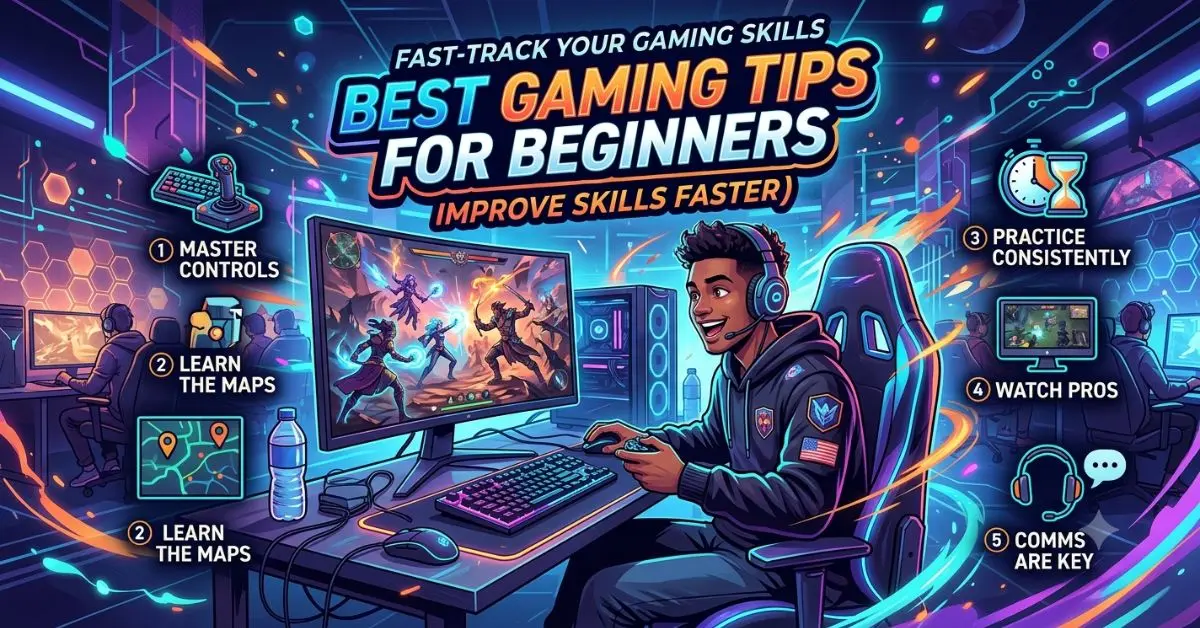
Getting started in gaming is exciting, but it can also feel overwhelming. With thousands of games available across PC, consoles, and mobile devices, beginners often struggle to understand where to begin. Learning the right strategies from the start can save time, reduce frustration, and make gaming much more enjoyable.
The best gaming tips for beginners focus on building strong fundamentals instead of relying on luck or expensive equipment. Whether you enjoy action games, role-playing adventures, racing games, sports titles, or multiplayer battles, improving your skills starts with understanding the basics. Small changes in your gameplay habits can make a noticeable difference over time.
Many new players believe that becoming better requires natural talent. In reality, consistent practice, smart decision-making, and learning from mistakes are far more important. Professional players didn’t become experts overnight—they improved by mastering the fundamentals and continuously refining their techniques.
This guide covers the best gaming tips for beginners in a simple, step-by-step format. You’ll learn how to choose the right game, optimize your gaming setup, improve your aim and movement, communicate effectively with teammates, and develop habits that help you progress faster. Whether your goal is to compete online or simply have more fun, these practical tips will help you become a more confident and skilled gamer.
What Are the Best Gaming Tips for Beginners?
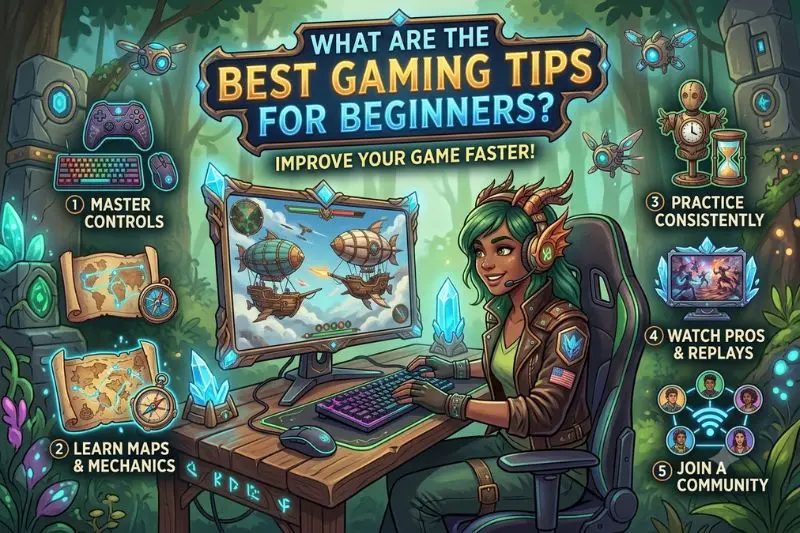
The best gaming tips for beginners are practical techniques and habits that help new players improve their gameplay efficiently. Instead of focusing on advanced tricks, these tips emphasize learning game mechanics, practicing consistently, making better decisions, and developing good gaming habits.
Every game has its own rules and objectives, but many skills apply across multiple genres. These include:
- Understanding the game’s objectives
- Learning the controls thoroughly
- Practicing movement and accuracy
- Managing in-game resources wisely
- Staying calm under pressure
- Working effectively with teammates
- Reviewing mistakes to improve performance
Building these core skills creates a strong foundation that makes learning any new game easier.
Why Are the Best Gaming Tips for Beginners Important?
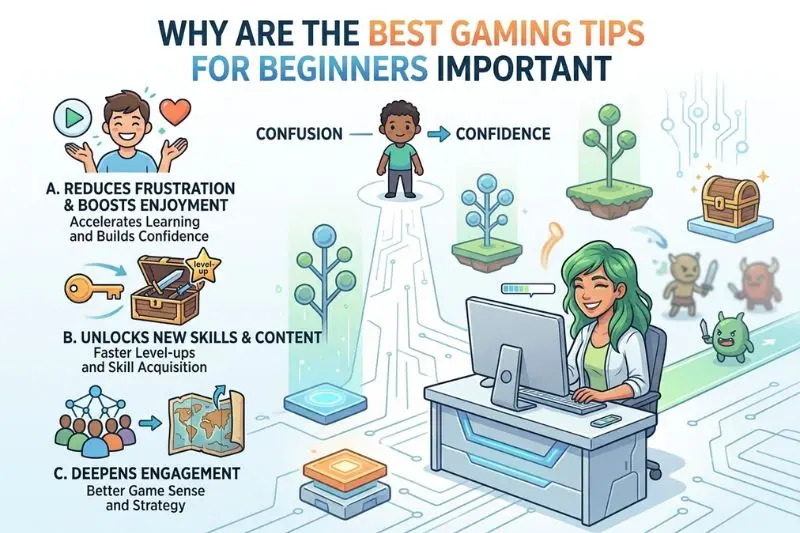
Starting with the right approach offers several long-term advantages. Rather than repeating the same mistakes, you’ll improve steadily while enjoying the learning process.
Here are some reasons why these tips matter:
Faster Skill Development
Following proven strategies helps you improve much quicker than relying on trial and error alone.
Better Decision-Making
Gaming isn’t just about quick reactions. Understanding when to attack, defend, explore, or retreat often determines success.
Greater Enjoyment
Winning is satisfying, but even losses become valuable learning experiences when you understand what went wrong.
Increased Confidence
As your skills improve, you’ll feel more comfortable trying different game modes, exploring new genres, and competing against stronger opponents.
Reduced Frustration
Many beginners quit because they expect instant success. Realistic expectations and steady improvement keep gaming enjoyable.
Step-by-Step Guide to Becoming a Better Gamer
Step 1: Choose the Right Game
Not every game is beginner-friendly. Starting with games that have gradual learning curves allows you to develop confidence before moving into more competitive titles.
Consider choosing games that offer:
- Helpful tutorials
- Adjustable difficulty settings
- Practice modes
- Active player communities
- Regular updates
If you’re completely new to gaming, avoid highly competitive games until you’ve learned the basics.
Step 2: Learn the Controls Thoroughly
Many beginners rush through tutorials and skip important instructions. This often leads to avoidable mistakes later.
Spend time learning:
- Basic movement
- Camera control
- Combat mechanics
- Inventory management
- Special abilities
- Shortcuts and key bindings
Practice these controls until they become second nature.
Step 3: Adjust Your Game Settings
Default settings aren’t always ideal.
Take time to customize:
Graphics Settings
Lower graphics if your system struggles to maintain smooth frame rates.
Mouse or Controller Sensitivity
Choose a sensitivity that feels comfortable and allows precise control.
Audio Settings
Good sound helps identify footsteps, enemy movements, and environmental cues.
Display Settings
Use the correct screen resolution and field of view if the game allows adjustments.
Optimizing your settings creates a smoother and more enjoyable gaming experience.
Step 4: Complete the Tutorial
Many players skip tutorials because they seem boring.
However, tutorials teach:
- Core mechanics
- Game objectives
- Combat basics
- Resource management
- Controls
- Special abilities
Completing the tutorial saves time later by preventing unnecessary mistakes.
Step 5: Practice Basic Movement
Movement is one of the most important gaming skills.
Practice:
- Running
- Jumping
- Dodging
- Sliding
- Crouching
- Climbing
- Strafing
Smooth movement often gives players an advantage before combat even begins.
Step 6: Focus on Accuracy Before Speed
Many beginners panic during fights.
Instead of firing quickly, focus on:
- Staying calm
- Aiming carefully
- Controlling recoil
- Taking accurate shots
- Watching enemy movement
Accuracy naturally improves speed over time.
Step 7: Learn the Game Maps
Map knowledge is a major advantage in almost every game.
Spend time exploring:
- Safe areas
- High-value loot locations
- Shortcuts
- Defensive positions
- Spawn points
- Objective locations
Knowing the map helps you predict enemy movements and make smarter decisions.
Step 8: Understand Game Mechanics
Every game includes unique mechanics that affect gameplay.
Learn how systems such as these work:
- Health regeneration
- Armor
- Damage types
- Weapon upgrades
- Character abilities
- Crafting
- Economy systems
- Skill trees
Understanding these mechanics often matters more than quick reflexes.
Step 9: Practice Regularly Instead of Playing for Hours
Long gaming sessions don’t always lead to improvement.
A better routine is:
- Warm up for 10–15 minutes.
- Play focused matches.
- Review mistakes.
- Practice weak areas.
- Take short breaks.
Consistent daily practice is usually more effective than occasional marathon sessions.
Step 10: Watch Experienced Players
One of the fastest ways to improve is by observing skilled players.
Pay attention to how they:
- Position themselves
- Move during combat
- Manage resources
- Make strategic decisions
- Communicate with teammates
- Adapt to different situations
Instead of copying everything immediately, focus on learning one new technique at a time and applying it in your own matches.
By following these foundational steps, you’ll build the essential skills needed to improve consistently and enjoy gaming more. In Part 2, we’ll cover the remaining advanced tips, the benefits and risks, common mistakes to avoid, detailed FAQs, expert advice, and a comprehensive conclusion to complete this guide.
Step 11: Communicate Effectively with Your Team
If you enjoy multiplayer games, communication is one of the most valuable skills you can develop. Even average players can outperform stronger opponents when they work together.
Keep your communication:
- Clear and simple
- Respectful toward teammates
- Focused on game objectives
- Helpful instead of critical
For example, instead of blaming a teammate for a mistake, provide useful information such as enemy locations or suggest a better strategy for the next round. Positive communication improves teamwork and increases your chances of winning.
Step 12: Learn from Every Match
Every game provides an opportunity to improve, regardless of whether you win or lose.
After each session, ask yourself:
- What did I do well?
- What mistakes did I make?
- Could I have positioned myself better?
- Did I manage my resources wisely?
- Was my timing effective?
Reviewing your gameplay regularly helps identify habits that need improvement. Small adjustments over time often lead to significant progress.
Step 13: Upgrade Your Skills Before Upgrading Your Equipment
Many beginners assume better hardware will instantly improve their performance. While quality equipment can enhance comfort and responsiveness, skill remains the biggest factor.
Before investing in expensive gaming gear, focus on:
- Practicing consistently
- Improving game knowledge
- Developing faster decision-making
- Learning advanced mechanics
- Building confidence
Once you’ve mastered the basics, upgrading your mouse, keyboard, controller, headset, or monitor can provide additional benefits.
Step 14: Stay Patient and Enjoy the Learning Process
Improvement doesn’t happen overnight.
Some days you’ll perform exceptionally well, while other days may feel frustrating. This is a normal part of learning.
Set realistic goals such as:
- Improving your accuracy
- Learning one new strategy each week
- Winning more matches than last month
- Mastering one character or weapon at a time
Celebrate small achievements because they build confidence and motivation.
Benefits of Best Gaming Tips for Beginners
Following these gaming tips offers several advantages:
- Faster improvement in overall gameplay.
- Better understanding of game mechanics.
- Increased confidence during matches.
- Improved teamwork and communication.
- Better aiming and movement skills.
- Reduced frustration while learning.
- More enjoyable gaming sessions.
- Stronger strategic thinking.
- Easier adaptation to different game genres.
- Greater consistency in performance.
Whether you play casually or competitively, these habits create a solid foundation for long-term success.
Disadvantages / Risks
Although gaming is an enjoyable hobby, it’s important to maintain healthy habits.
Potential risks include:
- Spending excessive time playing games.
- Eye strain from long gaming sessions.
- Poor posture that may cause physical discomfort.
- Reduced physical activity.
- Frustration from overly competitive environments.
- Overspending on unnecessary gaming equipment.
- Neglecting school, work, or personal responsibilities.
The key is maintaining a healthy balance between gaming and other aspects of life.
Common Mistakes to Avoid
Many beginners slow their progress by repeating the same mistakes. Avoiding these habits will help you improve more efficiently.
Skipping Tutorials
Tutorials teach essential mechanics that make the rest of the game much easier.
Changing Settings Too Frequently
Constantly adjusting sensitivity or controls prevents you from building muscle memory.
Blaming Teammates
Focus on improving your own gameplay instead of criticizing others.
Ignoring Objectives
Many players chase eliminations while forgetting the actual goal of the match.
Playing Without Breaks
Short breaks help maintain concentration and reduce fatigue.
Copying Professionals Exactly
Professional players often use advanced strategies that may not suit beginners. Learn the basics first before experimenting.
Giving Up Too Quickly
Every skilled gamer experienced setbacks. Persistence is one of the biggest factors in long-term improvement.
FAQs
How long does it take for a beginner to become good at gaming?
The timeline depends on the game and the amount of consistent practice. Most beginners notice significant improvement after several weeks of focused practice. Mastering advanced mechanics may take months, but steady progress is more important than quick results.
Should beginners play single-player or multiplayer games first?
Single-player games are generally a great starting point because they allow players to learn controls, mechanics, and strategies without the pressure of competing against experienced opponents. Once you’re comfortable, transitioning to multiplayer becomes much easier.
Do expensive gaming accessories improve performance?
High-quality equipment can improve comfort and responsiveness, but it won’t replace skill. Consistent practice, game knowledge, and decision-making have a much greater impact on performance than expensive hardware.
How can I improve my aim?
Improving aim requires regular practice. Adjust your sensitivity to a comfortable level, focus on accuracy instead of speed, and use training modes whenever possible. Consistency is the key to developing better precision.
How many hours should beginners practice each day?
Quality matters more than quantity. Practicing for 45 to 90 minutes with clear goals is often more effective than playing for several hours without focusing on improvement. Taking regular breaks also helps maintain concentration.
What is the biggest mistake beginners make?
The most common mistake is expecting instant results. Becoming a skilled gamer takes patience, practice, and a willingness to learn from mistakes. Staying consistent leads to long-term improvement.
Is it okay to lose frequently when starting?
Absolutely. Losing is a natural part of learning. Every defeat provides valuable experience that helps you identify weaknesses and improve your skills. Focus on progress rather than your win-loss record.
Expert Tips & Bonus Points
If you want to improve even faster, keep these expert recommendations in mind:
- Set small weekly gaming goals instead of unrealistic expectations.
- Learn one character, weapon, or class before trying them all.
- Watch your own gameplay to identify mistakes.
- Stay calm during intense situations.
- Practice movement just as much as aiming.
- Customize controls for maximum comfort.
- Keep your gaming area organized and distraction-free.
- Maintain a stable internet connection for online games.
- Stay hydrated during longer gaming sessions.
- Remember that enjoying the game is just as important as winning.
Developing good habits early makes learning advanced techniques much easier later.
Conclusion
Every experienced gamer was once a beginner. The difference between those who improve and those who struggle isn’t natural talent—it’s the willingness to learn, practice consistently, and stay patient. By following the best gaming tips for beginners, you’ll build the skills needed to enjoy games more while steadily improving your performance.
Start by choosing beginner-friendly games, learning the controls thoroughly, adjusting your settings for comfort, and completing tutorials instead of skipping them. As your confidence grows, focus on improving movement, accuracy, map awareness, teamwork, and decision-making. Remember that progress comes from analyzing your mistakes and applying what you’ve learned in future matches.
It’s equally important to maintain healthy gaming habits. Take regular breaks, avoid comparing yourself to experienced players, and balance gaming with your daily responsibilities. A positive mindset and realistic goals will keep you motivated throughout your gaming journey.
Most importantly, enjoy the process. Every challenge, victory, and defeat contributes to your growth as a player. With dedication and consistent practice, you’ll continue to develop stronger skills, greater confidence, and a deeper appreciation for gaming. Follow these strategies, stay committed, and you’ll soon discover that becoming a better gamer is both achievable and rewarding.
