

Introduction
Whether you’re new to gaming or have been playing for a while, there’s always room to improve. Every gamer dreams of making smarter decisions, reacting faster, winning more matches, and enjoying a smoother gaming experience. However, becoming a better player isn’t just about spending long hours in front of a screen. It requires patience, consistent practice, and learning the right techniques.
The best pro tips to improve your gameplay focus on building strong fundamentals before moving on to advanced strategies. Many beginners believe professional players succeed because they have expensive equipment or exceptional reflexes. In reality, most skilled gamers become successful because they understand game mechanics, communicate effectively, and continuously learn from their mistakes.
No matter what type of games you enjoy—first-person shooters, battle royale games, strategy games, sports simulations, racing games, or role-playing adventures—the same core principles apply. Better movement, stronger map awareness, improved accuracy, smart resource management, and calm decision-making can dramatically increase your performance.
In this guide, you’ll discover practical pro tips to improve your gameplay that are easy to understand and apply. From optimizing your settings and practicing efficiently to mastering teamwork and developing a winning mindset, these proven techniques will help you build confidence and improve steadily. Whether you play casually or hope to compete at a higher level, these strategies will help you become a smarter, more consistent gamer.
What Are Pro Tips to Improve Your Gameplay?
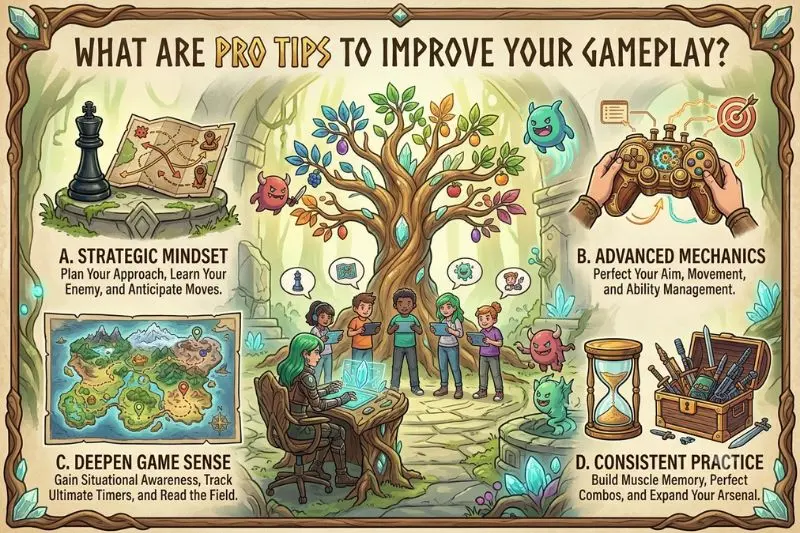
Pro tips to improve your gameplay are advanced yet practical strategies that help players perform better across different types of games. These aren’t secret shortcuts or complicated tricks. Instead, they are proven habits used by experienced players to make better decisions, improve mechanical skills, and stay consistent under pressure.
These tips focus on areas such as:
- Understanding game mechanics
- Improving reaction time
- Building map awareness
- Developing better aim and movement
- Communicating effectively
- Managing resources wisely
- Learning from mistakes
- Staying mentally focused
Instead of relying only on natural talent, these methods help players improve through smart practice and disciplined habits.
Why Are Pro Tips to Improve Your Gameplay Important?
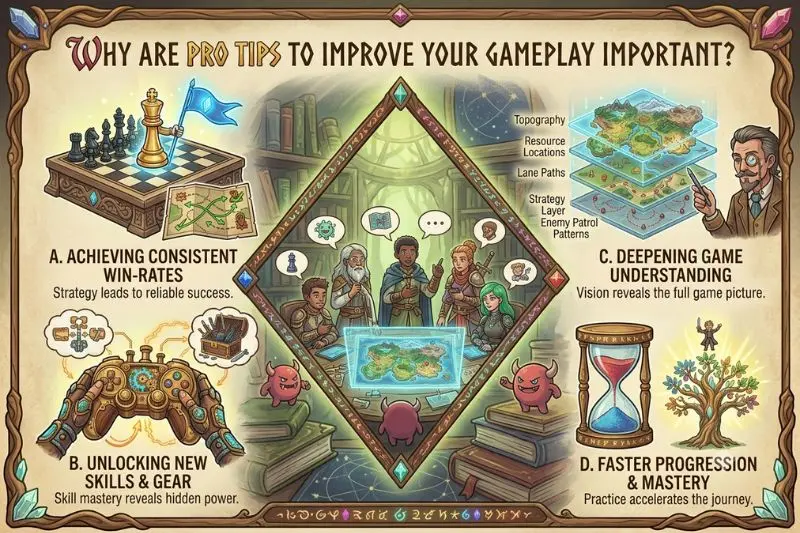
Many players spend hundreds of hours gaming without making noticeable progress. This usually happens because they repeat the same habits without identifying what needs improvement.
Following professional gaming strategies offers several advantages.
Faster Improvement
Practicing with purpose helps you improve much faster than simply playing match after match without clear goals.
Better Decision-Making
Gaming isn’t only about quick reactions. Choosing the right moment to attack, defend, rotate, or retreat often determines the outcome of a match.
Greater Consistency
Good players don’t perform well occasionally—they perform well consistently. Strong habits help reduce careless mistakes.
Higher Confidence
As your skills improve, you’ll feel more comfortable competing against stronger opponents and trying new game modes.
More Enjoyment
Winning is rewarding, but even losing becomes productive when every match teaches you something new.
Step-by-Step Guide to Improve Your Gameplay
Step 1: Master the Basics First
Many players rush into competitive matches without fully understanding the game’s mechanics.
Before focusing on advanced strategies, master:
- Movement controls
- Combat mechanics
- Character abilities
- Resource management
- Game objectives
- Equipment usage
Strong fundamentals create the foundation for every advanced skill you’ll learn later.
For example, in a shooting game, learning accurate aiming and movement is far more valuable than memorizing complicated strategies.
Step 2: Customize Your Game Settings
Professional players rarely use default settings.
Spend time adjusting:
Mouse or Controller Sensitivity
Choose a sensitivity that allows accurate aiming without sacrificing speed.
Graphics Settings
Higher graphics don’t always mean better gameplay.
Reducing unnecessary visual effects often increases frame rates and improves responsiveness.
Audio Settings
Good sound settings help identify footsteps, enemy movement, gunfire direction, and important environmental cues.
Display Settings
Choose the correct resolution and field of view to maximize visibility while maintaining smooth performance.
Comfortable settings allow you to focus on gameplay instead of fighting your controls.
Step 3: Build Consistent Practice Habits
Playing for six hours without a plan usually produces slower improvement than practicing for one focused hour.
A productive practice session might include:
- Warm-up exercises.
- Aim or movement training.
- Playing ranked or casual matches.
- Reviewing mistakes.
- Practicing weak areas.
Consistency always beats occasional marathon gaming sessions.
Step 4: Improve Your Aim
Aim is one of the biggest differences between average and skilled players.
Improve your accuracy by:
- Keeping your crosshair at head level.
- Practicing target tracking.
- Learning recoil control.
- Avoiding panic shooting.
- Taking accurate shots instead of rushing.
Many games include practice modes that allow players to develop muscle memory without competitive pressure.
Step 5: Learn Advanced Movement
Movement wins fights before bullets are fired.
Practice techniques such as:
- Strafing
- Sliding
- Crouching
- Jumping strategically
- Peeking corners
- Dodging attacks
- Using cover effectively
Good movement makes you a more difficult target while improving your positioning during combat.
Step 6: Understand Every Map
Professional players know maps almost as well as they know their own controls.
Learn:
- Common enemy routes
- High-ground positions
- Objective locations
- Defensive cover
- Loot areas
- Escape routes
- Ambush opportunities
Map knowledge allows you to predict opponents instead of simply reacting to them.
Step 7: Develop Strong Game Awareness
Game awareness means understanding everything happening around you.
Pay attention to:
- Enemy positions
- Teammate locations
- Remaining resources
- Time remaining
- Objective status
- Safe zones
- Available cover
Players with excellent awareness often defeat mechanically stronger opponents simply by making smarter decisions.
Step 8: Communicate Like a Team Player
Communication is often overlooked but can completely change the outcome of multiplayer matches.
When communicating:
- Share useful information.
- Call out enemy locations.
- Warn teammates about danger.
- Coordinate attacks.
- Stay calm under pressure.
- Avoid blaming others.
Positive communication creates stronger teamwork and improves everyone’s performance.
Step 9: Watch Skilled Players Carefully
Watching experienced gamers isn’t about copying every move. It’s about understanding why they make certain decisions.
Pay close attention to:
- Positioning
- Timing
- Resource management
- Decision-making
- Defensive play
- Aggressive strategies
- Adaptability
After watching, choose one or two techniques to practice rather than trying to imitate everything at once.
Step 10: Review Your Own Gameplay
One of the fastest ways to improve is to analyze your previous matches.
Ask yourself questions like:
- Why did I lose that fight?
- Was my positioning poor?
- Did I react too slowly?
- Did I waste important resources?
- Could I have communicated better?
Identifying recurring mistakes helps you improve far more quickly than simply playing additional matches.
Step 11: Stay Calm During Difficult Matches
Many players perform well until they become frustrated.
Professional players learn to stay calm even when they’re losing.
You can improve your composure by:
- Taking deep breaths between rounds.
- Avoiding emotional decisions.
- Focusing on the next objective instead of previous mistakes.
- Treating every match as a learning experience.
A calm mindset leads to smarter decisions and more consistent performance.
Step 12: Set Realistic Goals
Improvement happens one step at a time.
Instead of saying:
“I want to become a professional gamer.”
Set smaller goals such as:
- Improve aiming accuracy this week.
- Learn one new map thoroughly.
- Reduce unnecessary deaths.
- Communicate better with teammates.
- Master one character before learning another.
Small victories create long-term success and keep you motivated throughout your gaming journey.
Step 13: Build Consistency Through Smart Practice
One of the biggest differences between average players and highly skilled gamers is consistency. Anyone can have a great match once in a while, but experienced players perform well regularly because they follow a structured practice routine.
Instead of playing randomly, create a schedule that focuses on specific skills each day. For example:
Monday: Aim training and recoil control
Tuesday: Movement practice and positioning
Wednesday: Map knowledge and game awareness
Thursday: Team communication and strategy
Friday: Competitive matches
Weekend: Review gameplay and practice weak areas
This approach prevents burnout and ensures balanced improvement across every aspect of your gameplay.
Step 14: Learn to Adapt During Every Match
Every game is different. The strategy that works in one match may fail in another.
Professional players constantly adjust their gameplay based on changing situations.
Adapt by asking yourself:
- Is my current strategy working?
- Should I play more aggressively?
- Would defending be smarter?
- Are opponents changing their tactics?
- Do I need different equipment or abilities?
Flexibility often separates good players from great ones.
Step 15: Take Care of Your Physical and Mental Health
Gaming performance depends on more than in-game skills.
Healthy habits improve concentration, reaction time, and decision-making.
Maintain your performance by:
- Getting enough sleep.
- Drinking plenty of water.
- Taking breaks every 60–90 minutes.
- Stretching your hands, wrists, neck, and shoulders.
- Sitting with good posture.
- Avoiding long gaming sessions when you’re mentally exhausted.
A healthy player usually performs better than a tired one.
Step 16: Never Stop Learning
Games constantly evolve through updates, balance changes, and new strategies.
Stay informed by:
- Reading update notes.
- Learning new mechanics.
- Practicing with different characters or weapons.
- Experimenting with fresh strategies.
- Staying open to feedback.
Players who continue learning remain competitive for much longer.
Benefits of Pro Tips to Improve Your Gameplay
Applying these professional gaming techniques offers many long-term advantages.
Better Overall Performance
- Improved aim and accuracy.
- Faster reaction times.
- Better movement.
- Smarter positioning.
Stronger Decision-Making
- Better tactical choices.
- Improved resource management.
- Faster adaptation during difficult situations.
Increased Confidence
- More confidence during competitive matches.
- Reduced fear of making mistakes.
- Greater willingness to try advanced strategies.
Improved Teamwork
- Better communication.
- Stronger coordination.
- More successful objective play.
Faster Learning
- Easier understanding of new games.
- Better ability to master different genres.
- Improved long-term gaming skills.
Greater Enjoyment
Winning becomes more satisfying, while losses become valuable learning experiences instead of frustrating setbacks.
Disadvantages / Risks
Although improving your gameplay has many benefits, there are a few potential risks if balance is ignored.
- Spending too much time practicing.
- Becoming frustrated when progress feels slow.
- Comparing yourself unfairly with professional players.
- Ignoring physical health during long gaming sessions.
- Purchasing expensive equipment unnecessarily.
- Focusing only on winning instead of enjoying the game.
- Experiencing burnout from excessive competitive play.
Remember that gaming should remain an enjoyable hobby as well as a learning experience.
Common Mistakes to Avoid
Many players unknowingly slow their progress by repeating avoidable mistakes.
1. Playing Without Clear Goals
Simply playing match after match doesn’t guarantee improvement.
Always identify one specific skill to improve during each session.
2. Ignoring Positioning
Even excellent aim cannot compensate for poor positioning.
Use cover wisely and avoid exposing yourself unnecessarily.
3. Changing Sensitivity Constantly
Frequent changes prevent muscle memory from developing.
Choose comfortable settings and practice with them consistently.
4. Blaming Teammates
Every player makes mistakes.
Instead of criticizing others, focus on improving your own gameplay.
5. Skipping Warm-Up Sessions
Jumping directly into competitive matches often leads to slow reactions and poor accuracy.
A short warm-up prepares both your hands and your mind.
6. Becoming Overconfident
Winning several matches doesn’t mean you’ve mastered the game.
Continue learning and remain open to improvement.
7. Ignoring Game Objectives
Many players chase eliminations while forgetting objectives such as capturing points, defending areas, or completing missions.
Objectives usually determine victory.
8. Playing While Frustrated
Emotional decisions often lead to careless mistakes.
If frustration builds, take a short break before continuing.
FAQs
What is the fastest way to improve gameplay?
The fastest improvement comes from focused practice. Work on one skill at a time, review your mistakes, and stay consistent instead of simply playing longer hours.
Do professional gamers practice every day?
Most experienced players maintain regular practice schedules, but they prioritize quality over quantity. Structured practice sessions are more effective than endless gameplay.
Does expensive gaming equipment make you better?
Quality equipment can improve comfort and responsiveness, but it cannot replace practice, game knowledge, and decision-making. Skill always has the greatest impact.
How important is communication in multiplayer games?
Communication is extremely important. Sharing information about enemy positions, objectives, and strategies improves teamwork and often determines the outcome of close matches.
Should I focus on one game or play several games?
Beginners usually improve faster by focusing on one game until they understand its mechanics thoroughly. After building strong fundamentals, learning additional games becomes much easier.
How can I stay motivated when losing?
Treat every defeat as a learning opportunity. Review what went wrong, make small improvements, and focus on long-term progress rather than individual wins or losses.
How many hours should I practice?
Most players benefit from 60–90 minutes of focused daily practice. Quality practice with clear goals is usually more productive than spending many hours playing without purpose.
Can older players still improve their gaming skills?
Absolutely. While reaction time may vary between individuals, decision-making, strategy, map awareness, teamwork, and consistency continue to improve with practice regardless of age.
Expert Tips & Bonus Points
If you want to continue improving beyond the basics, these expert recommendations can make a noticeable difference.
- Keep your gaming setup clean and organized.
- Use headphones to hear important in-game sounds clearly.
- Learn keyboard shortcuts or controller combinations until they become automatic.
- Focus on improving one weakness at a time.
- Watch replays of both victories and defeats.
- Play against stronger opponents occasionally to challenge yourself.
- Stay patient during difficult learning periods.
- Maintain a positive attitude toward teammates.
- Celebrate small improvements instead of expecting instant mastery.
- Remember that smart decisions often beat fast reactions.
The best players never stop refining their fundamentals, even after years of experience.
Conclusion
Improving your gaming skills is a journey that requires dedication, patience, and the right mindset. The pro tips to improve your gameplay discussed in this guide provide a practical roadmap for becoming a more confident and capable player. Instead of searching for shortcuts, focus on building strong fundamentals such as accurate aiming, smooth movement, effective communication, map awareness, and smart decision-making.
Consistency is one of the most important factors in long-term success. Short, focused practice sessions combined with regular self-review will produce better results than endless hours of unfocused gameplay. Learn from every victory and every defeat, and don’t be afraid to experiment with new strategies as your skills develop.
Equally important is maintaining a healthy balance between gaming and everyday life. Taking breaks, staying physically active, and keeping a positive attitude will help you avoid burnout while making the learning process more enjoyable.
Remember that every skilled gamer started as a beginner. Progress may seem slow at times, but each practice session brings you one step closer to your goals. Stay committed, continue learning, and enjoy the process. With patience, discipline, and the right approach, you’ll steadily transform your gameplay and gain the confidence to take on greater challenges in any game you choose.
